
ApoB – cholesterol particles in focus
ApoB adds the count of cholesterol-carrying particles to your standard LDL profile. Measure ApoB plus 9 more blood values from home. Nearly painless upper-arm sample, certified lab. €99, no subscription.
 GDPR · Art. 9 data separation
- Physician-developed protocol
- Accredited lab: Limbach Gruppe
- Class I medical device (CE)
- FDA-cleared device
- All from home
- Evidence-based methodology

Where LDL-C and ApoB can disagree
In “discordance” studies - people whose LDL-C and ApoB point in different directions - long-term cardiovascular risk tracked the ApoB particle count, not the cholesterol weight.
LDL-C weighs the cholesterol; ApoB counts the particles carrying it. The 2019 ESC/EAS guideline notes that ApoB, where available, can be used as an alternative to LDL-C as the primary measurement for risk assessment.
Two people. Identical LDL-C. Different particle counts.
Both panels carry the same total LDL cholesterol - 130 mg/dL. What differs is how it is packaged. More particles, smaller particles, higher chance of one slipping into an artery wall.
Fewer, larger particles
Same cholesterol weight is packaged into fewer, larger particles. Lower particle count, lower lifetime risk.
Many smaller particles
The same cholesterol is split across many more particles. Higher particle count, more chances to lodge in an artery wall, higher risk.
Illustrative diagram - particle sizes and counts are stylised for clarity. The point is the relationship: LDL-C reports total weight, ApoB reports the number of particles carrying that weight.
Where your ApoB number sits matters.
Ranges differ between European, American and national guidelines. Below is the framework most cardiology guidelines now use for primary prevention.
Associated with the lowest long-term cardiovascular risk in current guideline frameworks. Lower targets apply for people with established disease.
Worth a conversation. Lifestyle change can often bring this back into range; medication is sometimes warranted.
Clinically meaningful elevation. A physician conversation is the right next step, regardless of LDL-C value.
Reference ranges are guidance, not diagnosis. Your CHIRAYOU report uses the range reported by the analysing laboratory and should be interpreted alongside your other markers and personal history.
Why ApoB is strongest when it isn’t read alone
ApoB tells you how many atherogenic particles are circulating - but cardiovascular risk is rarely driven by one number. Inflammation and kidney function both shape the bigger picture. That is why CHIRAYOU measures ApoB plus 9 more blood values, so your result sits in context.

hsCRP (inflammation)
A sensitive marker for the silent, low-grade inflammation that drives plaque alongside ApoB.

eGFR (kidney)
Kidney function is tightly linked to long-term cardiovascular risk.
ApoB, inflammation and kidney function belong together for a real risk picture. Explore the full panel:
Single ApoB test vs. the CHIRAYOU 10-value baseline test
A standalone ApoB test gives you one number to interpret yourself. The CHIRAYOU baseline test measures ApoB plus 9 more blood values - collected with a nearly painless upper-arm device and read together, using a physician-developed protocol.
Single ApoB test
ApoB + 9 more blood values
Is CHIRAYOU a single ApoB test?
You get your ApoB value either way - analysed in a certified lab and explained in plain language. CHIRAYOU simply isn't a single-marker test: from the same sample you also get ApoB plus 9 more blood values at one flat price - so you understand your cardiovascular risk in context, not as an isolated number.
10 blood values - with ApoB at the centre
ApoB plus 9 more blood values from a single sample. ApoB is highlighted here - the other markers provide the context.
From your door to your ApoB number, in four steps.
No vein needle. No appointment. No waiting room. Less than ten minutes from your couch.

Everything arrives in one kit
Tasso+ device, step-by-step instructions and a prepaid return envelope. Free shipping, nothing else to buy.
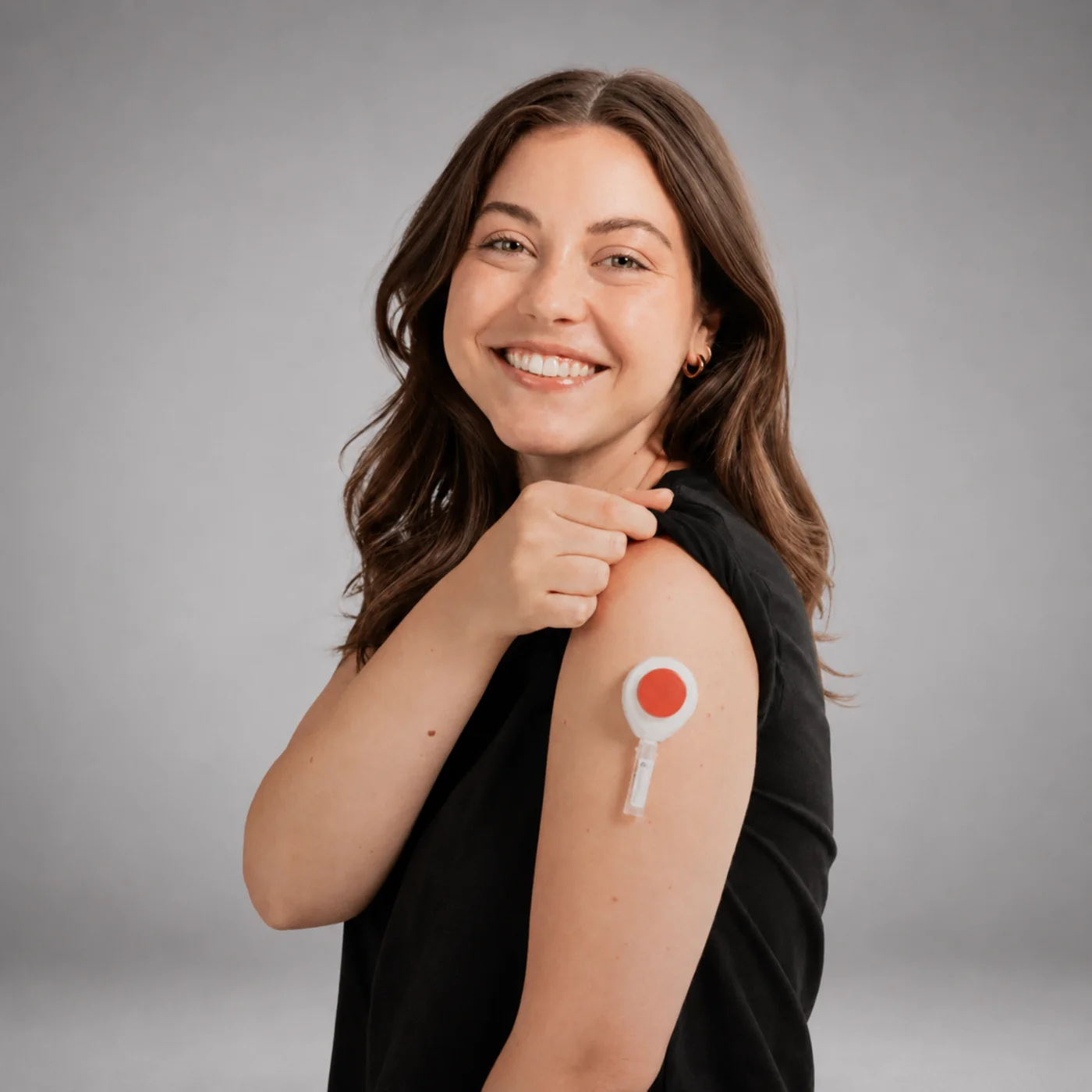
Stick it on your upper arm, press the button
A gentle vacuum draws a few drops of capillary blood into a small tube. No vein needle, no finger prick - most people barely feel it.

Seal the tube, drop it in any mailbox
The envelope is addressed and postage-paid. Your sample goes straight to Limbach Gruppe, a DAkkS-accredited German lab.
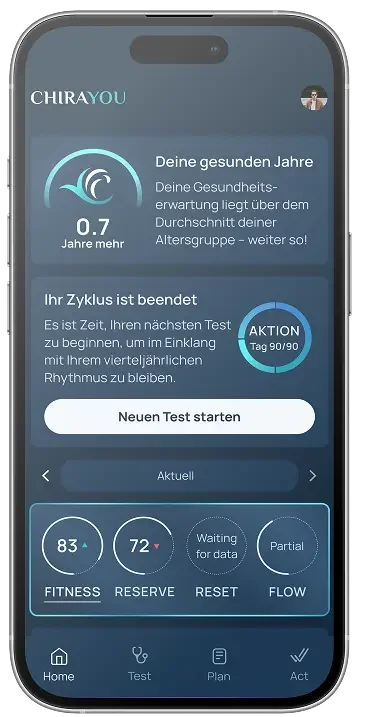
Lab-verified results in your app
ApoB plus 9 more blood values, each set against its reference range - with context and recommended next steps.

The Tasso+, in short: fits in your palm and sticks on like a patch · one button, a gentle vacuum fills the tube · no lancet, no needle in a vein
Analyzed in a DAkkS-accredited lab. Physician-led.
The convenience does not come from a softer lab. It comes from cutting out the clinic visit - not the rigor behind the result.

“My goal is to slow aging and support a healthy, radiant appearance. Healthy aging means a state in which the number of healthy, active years comes as close as possible to the biological lifespan.”
Approbiert in Germany. Results that fall clearly outside the reference range are flagged in your app with a recommendation to consult your GP. For a personal physician review on each result, see the CHIRAYOU Program.









Limbach Gruppe - DAkkS-accredited German lab
Your sample is analysed by Limbach Gruppe, one of Germany's largest medical laboratory networks - the same accreditation a clinic venous draw uses. Validated stability window for at-home capillary samples in transit.
Free replacement if your sample fails QC
Too little blood, damaged in transit, missed the stability window? We send a new kit. You do not pay again.
€99. Everything included. No subscription required.
The CHIRAYOU test includes everything you need: at-home kit, upper-arm Tasso+ collection, lab analysis, ApoB plus 9 more blood values, a digital report, and interpretation built on a physician-developed protocol.
CHIRAYOU At-Home Blood Test
- At-home test kit
- Tasso+ upper-arm collection
- ApoB (your cardiovascular risk marker)
- 9 more blood values for context
- Lab analysis + digital report
- Digital results in the app
- Shipping to you and return to the lab included
- Replacement kit if the sample can’t be analyzed
Optional doctor consultation. Prefer to go through your results with a physician? Add an optional 20-minute video consultation at checkout (+€50).
Secure payment via Stripe · Free shipping to you & back to the lab
Per blood value, a fraction of a single vitamin D lab test (~€40) - 10 lab-analyzed values from one sample.
See the full cost breakdownWhat people ask about ApoB.
Short, direct answers - and where the source-level detail lives if you want to go deeper.
Know your ApoB. Know your real cardiovascular risk.
10 blood values including ApoB, hsCRP and eGFR. Collected at home, analysed in a certified German lab.