Blood sugar: why grip strength and belly fat reveal more than BMI

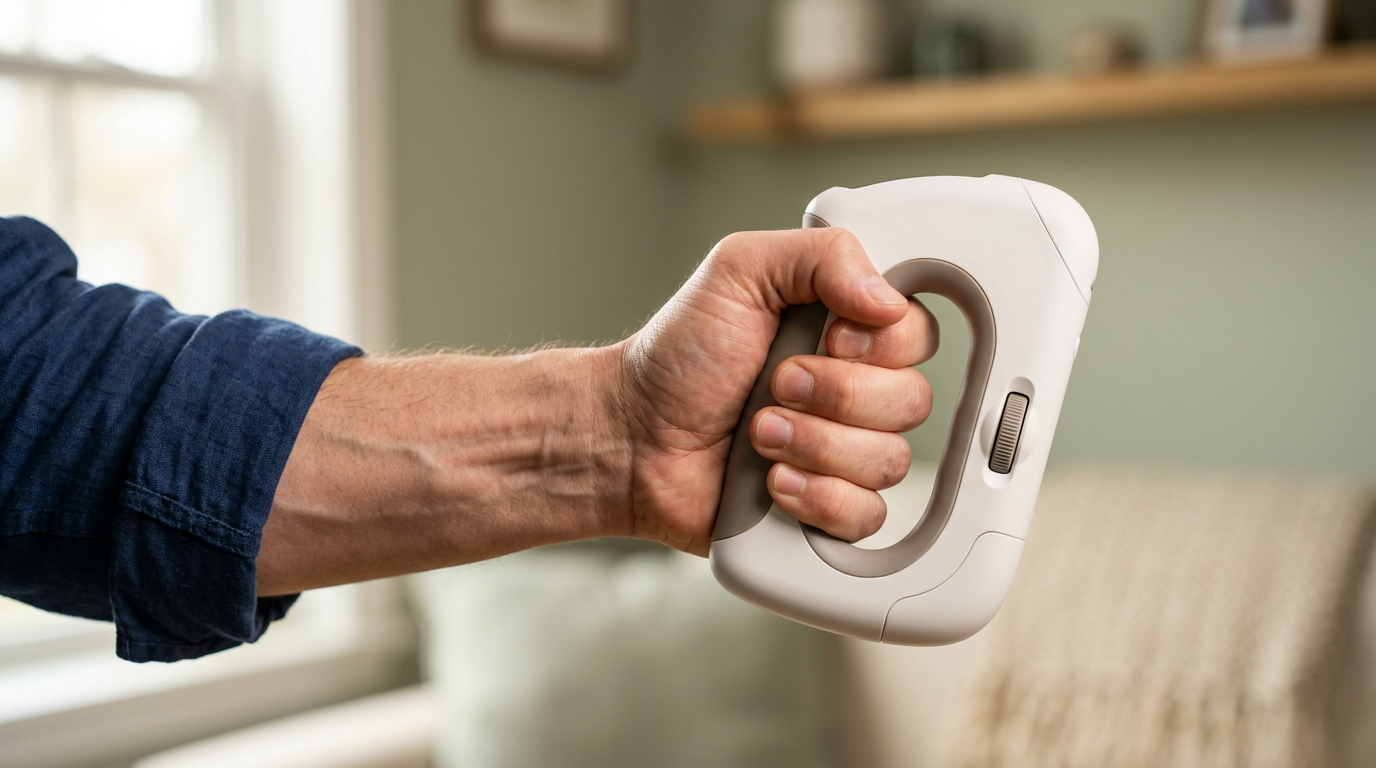
Anyone worried about rising blood sugar usually looks at the scales and BMI. In recent studies, however, grip strength and the ratio of muscle mass to belly fat are more closely linked to insulin resistance and prediabetes than BMI alone, and muscle strength is linked to lower cardiovascular risk above all in early stages. So your muscles matter for your metabolism too, and both can be measured.
Key points at a glance
- In a study of 44 women aged 40 to 60 with prediabetes or newly diagnosed type 2 diabetes, lower grip strength went along with greater insulin resistance, while BMI and visceral fat showed no association after adjustment.
- In US data from 4,195 adults, a high ratio of arm and leg muscle mass to visceral fat is linked to markedly less prediabetes and identifies prediabetes better than BMI.
- In the UK Biobank, with 271,061 people, those with a large waist and weak grip at the same time had the highest risk of atherosclerotic cardiovascular disease.
- In a Chinese cohort, good muscle strength is linked to less cardiovascular disease mainly in early stages of strain on metabolism, kidneys and heart.
- A baseline and a re-test after 90 days show whether muscle, belly fat and blood sugar move together.
Why is BMI not enough for blood sugar?
Body mass index (BMI) relates weight to height and cannot tell muscle from fat. For blood sugar, though, exactly this distribution is revealing. A cross-sectional analysis of 4,195 participants in the US health survey NHANES in Diabetes, Obesity & Metabolism (2026) examined the ratio of skeletal muscle mass in the arms and legs to visceral fat area. Visceral fat is the fat that sits deep in the abdomen and surrounds the organs.
People with a higher muscle-to-visceral-fat ratio were markedly less often affected by prediabetes (adjusted odds ratio 0.24). Prediabetes means blood sugar is raised but does not yet meet the criteria for diabetes. The ratio identified prediabetes better than BMI, with a discriminative performance of 0.689 versus 0.651 in women and 0.653 versus 0.614 in men. That is a measurable edge, though not a perfect test.
Two details make the study especially instructive. The ratio was more strongly linked to blood sugar 2 hours after a glucose drink than to fasting blood sugar. And around half of the association (51 percent) could be explained statistically by insulin resistance, meaning that body cells respond more weakly to the hormone insulin. A single fasting value therefore shows only part of the picture.
What does grip strength reveal about glucose metabolism?
Grip strength is linked to insulin resistance in early stages of disturbed blood sugar regulation, even when BMI and belly fat show no association. A cross-sectional study of 44 women aged 40 to 60 in Archives of Endocrinology and Metabolism (2026) measured grip strength with a digital dynamometer and visceral fat by computed tomography. Women with a stronger grip had lower insulin resistance.
Visceral fat volume and BMI were not associated with insulin resistance after accounting for other factors. The study is small, the model explained only part of the differences, and the authors call for long-term studies. Even so, it points in the same direction as the large cohorts: muscle performance is a signal of early metabolic change.
A prospective cohort study of 8,405 adults from the China Health and Retirement Longitudinal Study in Experimental Gerontology (2026) supports this. Lower relative grip strength was linked there to a more advanced stage of cardiovascular-kidney-metabolic syndrome (adjusted odds ratio 1.77). This syndrome describes a progressive continuum of strain on metabolism, kidneys and heart.
Why does the combination of belly fat and weak muscles matter?
Belly fat and weak muscles together are linked to higher cardiovascular risk than either factor alone. A prospective cohort study of 271,061 UK Biobank participants in Diabetes, Obesity & Metabolism (2026) followed people for a median of 14.8 years. During that time, 27,189 developed atherosclerotic cardiovascular disease, meaning disease caused by deposits in the arteries.
A large waist was linked to a 35 percent higher risk, low grip strength to a 14 percent higher risk. People with both carried the highest risk (hazard ratio 1.53), with signs of a modest interaction between the two factors. What was measured was waist circumference, a simple proxy for belly fat. Additional analyses found shared signalling molecules from inflammatory, immune and metabolic processes.
Why is it worth starting early?
In the Chinese cohort, the link between muscle strength and cardiovascular health shows up mainly while metabolism, kidneys and heart are still under little strain. In the early stages 0 to 2, normal grip strength over 9 years was linked to a 20 percent lower risk of cardiovascular disease, and normal performance in the sit-to-stand test to a 22 percent lower risk. In the more advanced stage 3, the associations were weaker and less certain.
Prediabetes is not a fixed fate either. A prospective cohort study of 2,859 middle-aged and older adults with prediabetes in Diabetes Research and Clinical Practice (2026) found that 56 percent had normal blood sugar again after 5 years. A lower visceral fat burden, captured with a calculated index, was linked to higher odds of this return. The link was clearest in people aged 60 to 70.
All of these studies are observational. They show associations, not causes. The direction is clear nonetheless: looking early means acting in a phase when much can still change.
What can you actually do and measure?
It makes sense to track muscle strength, belly fat and blood sugar together, rather than watching weight alone. Whether targeted strength training changes grip strength, visceral fat and blood sugar together was not examined in the studies cited here. That is exactly what you can check for yourself: with a baseline, a phase of targeted change in movement, strength training, nutrition and sleep, and a re-test.
| Measure | What it reflects | Why it fits the topic |
|---|---|---|
| Grip strength | Whole-body muscle strength | Linked in the studies to insulin resistance and cardiovascular risk |
| Visceral fat | Fat around the organs, as a signal of metabolic inflammation | The counterpart to muscle mass in the muscle-to-fat ratio |
| Fructosamine (FRAc) | Average blood sugar over the prior 2 to 3 weeks | Shows whether glucose metabolism moves along |
| Sit-to-stand test | Leg strength and coordination | Adds the lower body to grip strength |
A single reading is a snapshot. Only the trend shows whether the balance of muscle and belly fat is shifting and blood sugar follows.
When to see a doctor?
Talk to a doctor if your blood sugar values rise across several measurements, if you lose strength noticeably, or if you are worried about your metabolism. Known conditions of the heart, kidneys or metabolism also belong in medical hands. The doctor decides whether further tests or treatment are needed.
How Chirayou can help
CHIRAYOU is a doctor-led online health program for preventive health. The at-home blood test kit measures fructosamine (albumin-corrected, a faster-responding counterpart to HbA1c), along with triglycerides, apolipoprotein B (ApoB), hsCRP and vitamin D, among others. The 90-day program adds grip strength, the sit-to-stand test and visceral fat (via a smart scale), 20 markers in total across the categories Fitness, Reserve, Reset and Flow.
The process follows the Test, Plan, Act loop: you take a baseline of grip strength, visceral fat and fructosamine. A plan with a few targeted measures, such as strength training, accompanies your daily life. After 90 days you re-test and see whether the muscle-to-fat balance and blood sugar moved together. Doctors discuss the results with you.
Your next step: Start the 90-day program and measure muscle, belly fat and blood sugar over time.
The bottom line
Muscles reveal more about blood sugar than the scales and BMI suggest. In studies, grip strength and the ratio of muscle to belly fat are closely linked to insulin resistance, prediabetes and cardiovascular risk, especially in early stages. Measuring these values together and checking again after 90 days shows whether the balance is shifting.
This article is for general information only and does not replace medical advice, diagnosis or treatment.
Frequently asked questions
Is a normal BMI a sign of healthy blood sugar?
A normal BMI on its own says little about blood sugar. In a study of 44 women with early blood sugar disturbance, BMI was not associated with insulin resistance after adjustment, while grip strength was. In US data from 4,195 adults, the ratio of muscle mass to visceral fat identified prediabetes better than BMI. How your body is composed reveals more about metabolism than weight alone.
What does grip strength have to do with blood sugar?
Grip strength stands for whole-body muscle strength and is linked to glucose metabolism in studies. Women with prediabetes or newly diagnosed type 2 diabetes and a stronger grip had lower insulin resistance. In a Chinese cohort of 8,405 adults, lower relative grip strength was linked to more advanced strain on metabolism, kidneys and heart. These are associations, not a proven cause.
Can prediabetes reverse?
Yes, in many people blood sugar returns to normal. In a Chinese cohort study of 2,859 middle-aged and older adults with prediabetes, 56 percent had normal values again after 5 years. A lower visceral fat burden was linked to higher odds of this. Whether and how this works for you is best discussed with a doctor.
Does strength training help against rising blood sugar?
The studies cited here did not test strength training directly. They show that more muscle strength and a more favourable ratio of muscle to belly fat go along with better glucose metabolism and lower cardiovascular risk. Whether your values change with training is shown by a baseline with a re-test after 90 days, interpreted by a doctor.
Why does CHIRAYOU measure fructosamine?
Fructosamine shows average blood sugar over the prior 2 to 3 weeks. CHIRAYOU uses the albumin-corrected value as a faster-responding counterpart to the familiar HbA1c. A multi-week average shows more than a single fasting value on one morning. Within a 90-day cycle, this makes it possible to track whether glucose metabolism changes in parallel with muscle strength and belly fat.
References
- Yousief E, Khozam M, Ayeldeen G, et al. (2026). Association of handgrip strength and CT-derived body composition with insulin resistance in women with prediabetes and newly diagnosed type 2 diabetes. Archives of endocrinology and metabolism. pubmed.ncbi.nlm.nih.gov
- Yang H, Zhong W, Shen S, et al. (2026). Higher Appendicular Skeletal Muscle Mass to Visceral Fat Area Ratio Associated With Reduced Risk of Prediabetes. Diabetes, obesity & metabolism. pubmed.ncbi.nlm.nih.gov
- Luo J, Wang Y, Tan Z, et al. (2026). Integrated Assessment of Abdominal Adiposity and Muscle Strength for Atherosclerotic Cardiovascular Disease Risk in UK Biobank: A Comprehensive Analysis From Population Cohort to Multi-Omics Molecular Exploration. Diabetes, obesity & metabolism. pubmed.ncbi.nlm.nih.gov
- Hou Y, Lu Z, Chi Y, et al. (2026). Muscle health and cardiovascular risk across stages of Cardiovascular-Kidney-Metabolic syndrome: A prospective cohort study. Experimental gerontology. pubmed.ncbi.nlm.nih.gov
- Wu F, Wang L, Peng Q, et al. (2026). Association of the visceral adiposity index with prediabetes remission to normoglycemia in middle-aged and older Chinese adults: a prospective cohort study. Diabetes research and clinical practice. pubmed.ncbi.nlm.nih.gov